
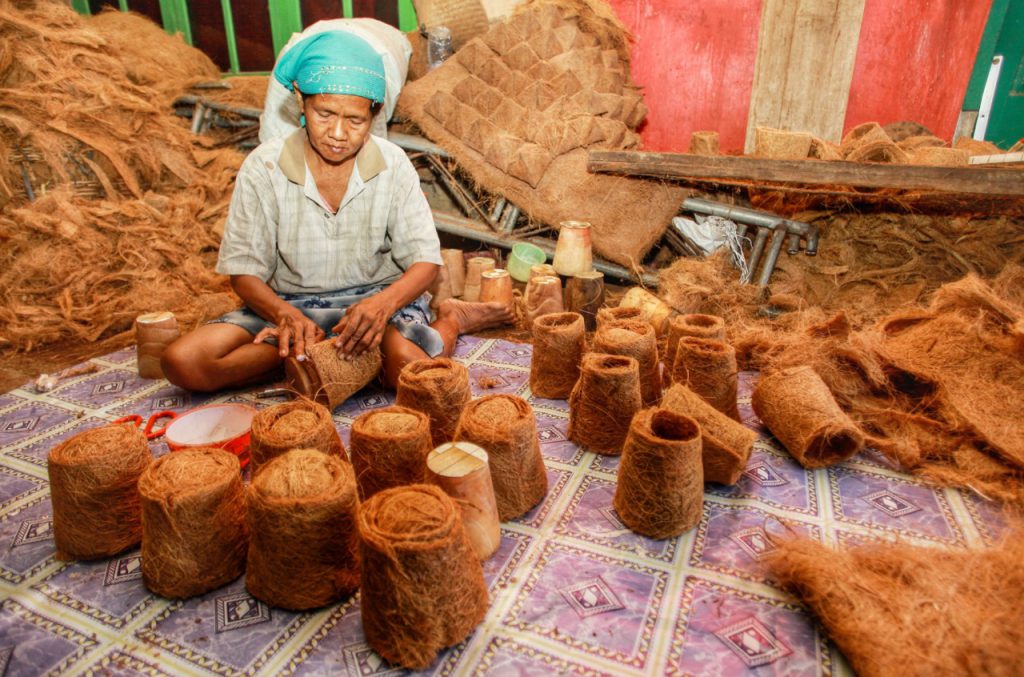
The utilization of Sabut Kelapa (coconut coir) waste in Rantewringin Village, Buluspesantren, continues to grow. By utilizing creative ideas that utilize coconut coir can improve the economy and also attract tourists visiting Kebumen. Market demand for handicraft products continues to increase. Although the industrial sector is still modest, its production capacity is quite high with markets covering Java, Sumatra, Kalimantan and overseas (Taiwan and Japan).
Pottery
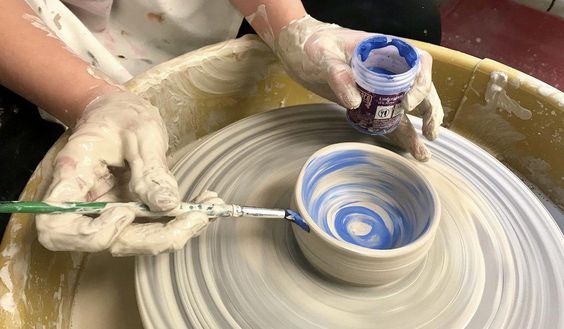
Gebangsari Village has been a center for pottery craftsmen in Kebumen since a long time ago. In the pottery-making process, the men worked for the clay and during the pottery burning system, while the women were more important in matters of printing. Gebangsari craftsmen still use the principle of simplicity in processing pottery.
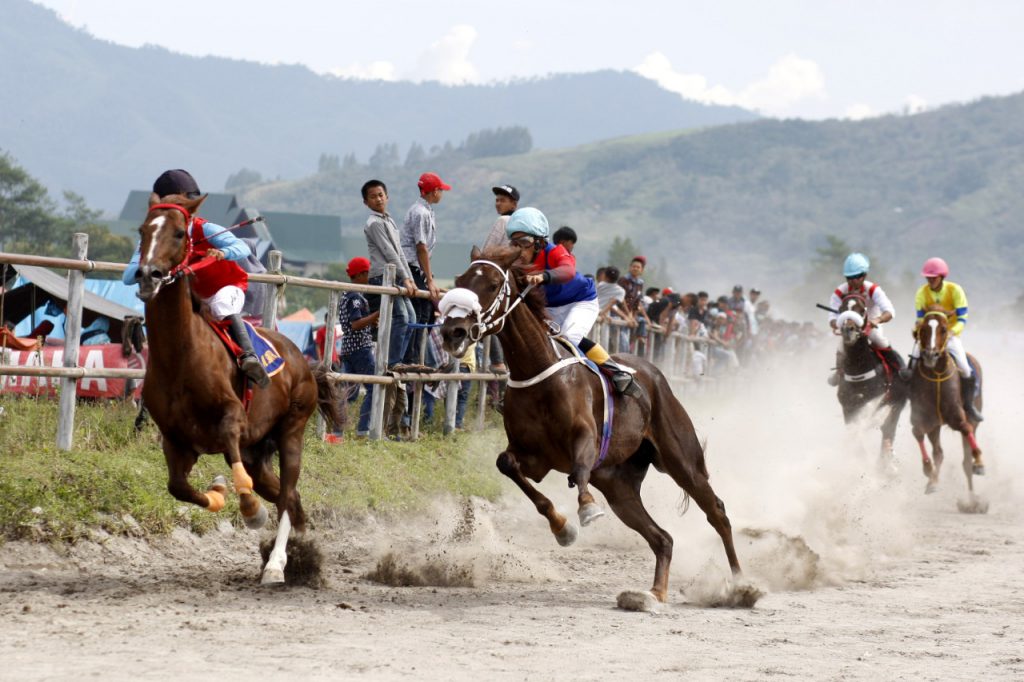
Pacuan Kuda competitions are held in Ambalresmi Village after Idul Fitri, (usually seven days after celebration). This competition is the collaboration with the Indonesian Equestrian Sports Association (PORDASI) which is motivated by the Ambal people who like to raise horses. This competition was not only attended by local residents, but also people from several places in Java, even from outside Java.
Sabut Kelapa (Coconut Coir)
The utilization of Sabut Kelapa (coconut coir) waste in Rantewringin Village, Buluspesantren, continues to grow. By utilizing creative ideas that utilize coconut coir can improve the economy and also attract tourists visiting Kebumen. Market demand for handicraft products continues to increase. Although the industrial sector is still modest, its production capacity is quite high with markets covering Java, Sumatra, Kalimantan and overseas (Taiwan and Japan).
Pottery
Gebangsari Village has been a center for pottery craftsmen in Kebumen since a long time ago. In the pottery-making process, the men worked for the clay and during the pottery burning system, while the women were more important in matters of printing. Gebangsari craftsmen still use the principle of simplicity in processing pottery.
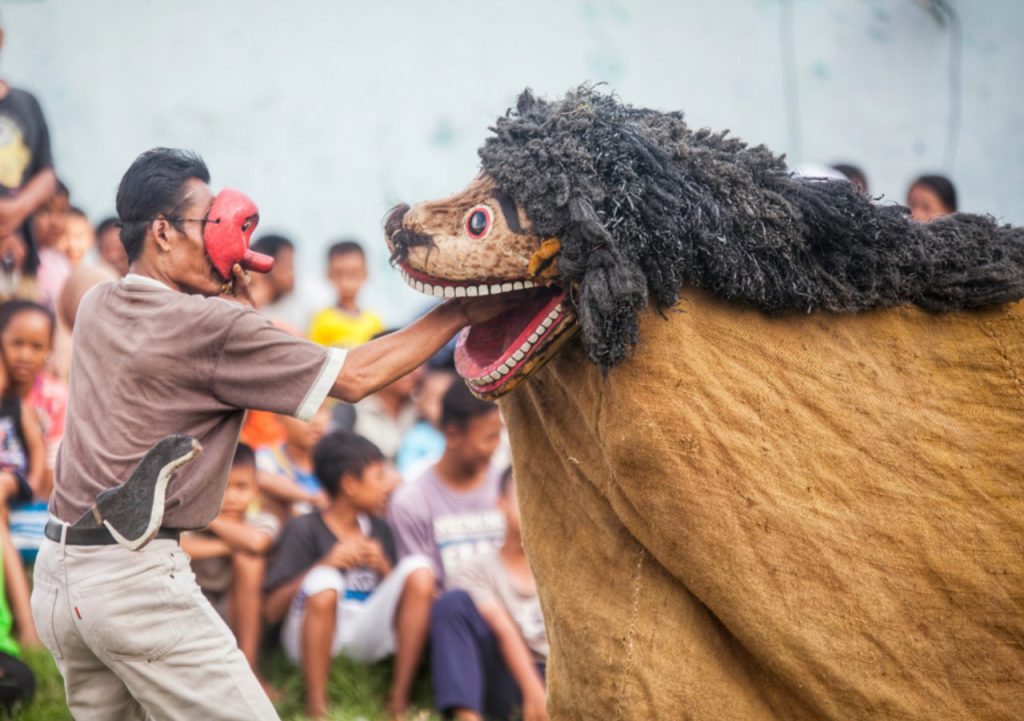
Long time before Kuda Lumping art existed, our ancestors already knew Ebleg. Ebleg is a traditional art originally from Panjer Regency (the name of Kebumen Regency in the ancient time which became Mataram’s food barn in the Netherlands) which has existed since the time of Sultan Agung Hanyakrakusuma.
Pacuan Kuda (Horse Racing)
Pacuan Kuda competitions are held in Ambalresmi Village after Idul Fitri, (usually seven days after celebration). This competition is the collaboration with the Indonesian Equestrian Sports Association (PORDASI) which is motivated by the Ambal people who like to raise horses. This competition was not only attended by local residents, but also people from several places in Java, even from outside Java.
Sabut Kelapa (Coconut Coir)
The utilization of Sabut Kelapa (coconut coir) waste in Rantewringin Village, Buluspesantren, continues to grow. By utilizing creative ideas that utilize coconut coir can improve the economy and also attract tourists visiting Kebumen. Market demand for handicraft products continues to increase. Although the industrial sector is still modest, its production capacity is quite high with markets covering Java, Sumatra, Kalimantan and overseas (Taiwan and Japan).
Pottery
Gebangsari Village has been a center for pottery craftsmen in Kebumen since a long time ago. In the pottery-making process, the men worked for the clay and during the pottery burning system, while the women were more important in matters of printing. Gebangsari craftsmen still use the principle of simplicity in processing pottery.
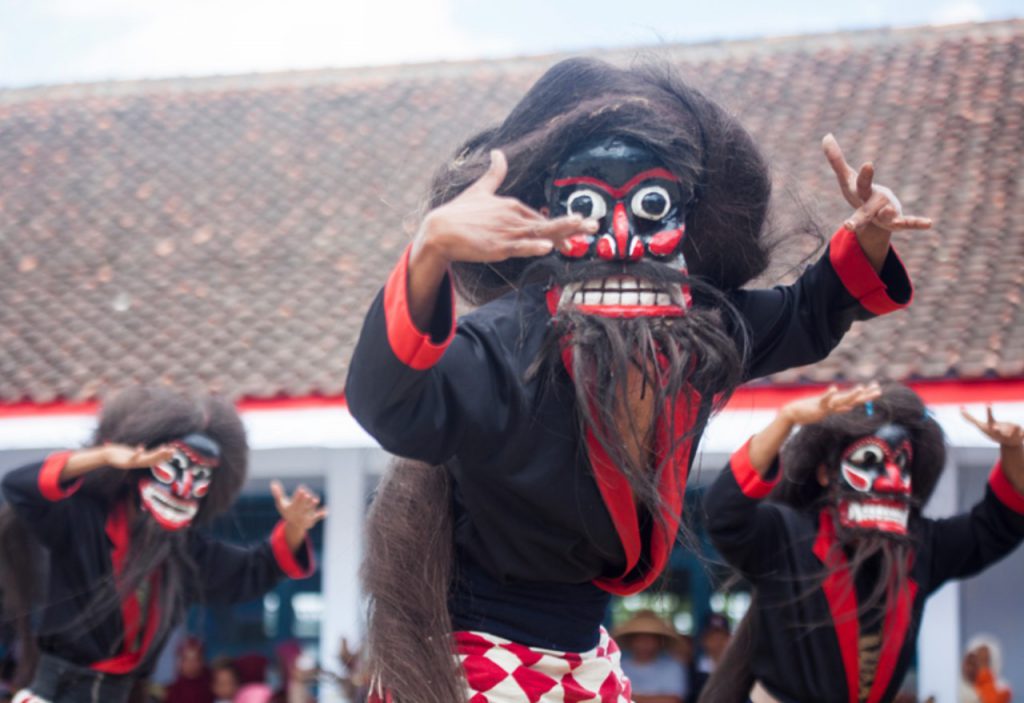
The art of Cepetan Alas belongs to the art of ballet, which is a story presented in the form of a dance without any dialogue which is usually accompanied by music (kentungan, drum, gamelan, etc.). In earlier times, there was a Milujengi Ceremony as a part of Cepetan Alas art (i.e. food alms ceremony and prayer together to ask for safety and peace) held every Sura (1 Muharram).
Ebleg (Singa Mataram)
Long time before Kuda Lumping art existed, our ancestors already knew Ebleg. Ebleg is a traditional art originally from Panjer Regency (the name of Kebumen Regency in the ancient time which became Mataram’s food barn in the Netherlands) which has existed since the time of Sultan Agung Hanyakrakusuma.
Pacuan Kuda (Horse Racing)
Pacuan Kuda competitions are held in Ambalresmi Village after Idul Fitri, (usually seven days after celebration). This competition is the collaboration with the Indonesian Equestrian Sports Association (PORDASI) which is motivated by the Ambal people who like to raise horses. This competition was not only attended by local residents, but also people from several places in Java, even from outside Java.
Sabut Kelapa (Coconut Coir)
The utilization of Sabut Kelapa (coconut coir) waste in Rantewringin Village, Buluspesantren, continues to grow. By utilizing creative ideas that utilize coconut coir can improve the economy and also attract tourists visiting Kebumen. Market demand for handicraft products continues to increase. Although the industrial sector is still modest, its production capacity is quite high with markets covering Java, Sumatra, Kalimantan and overseas (Taiwan and Japan).
Pottery
Gebangsari Village has been a center for pottery craftsmen in Kebumen since a long time ago. In the pottery-making process, the men worked for the clay and during the pottery burning system, while the women were more important in matters of printing. Gebangsari craftsmen still use the principle of simplicity in processing pottery.
Kebumen is rich in the beauty of its natural panorama, because everything can be found in Kebumen, both natural and artificial tourism. In nature tourism, Kebumen has karst landscapes, beaches, caves, hills, mountains, reservoirs, ponds, baths, nature reserves, and others. As for the tours, there are historical heritage buildings, religious tourism, and education that are integrated with the culture and socio-culture of Kebumen residents.
Cepetan Art
The art of Cepetan Alas belongs to the art of ballet, which is a story presented in the form of a dance without any dialogue which is usually accompanied by music (kentungan, drum, gamelan, etc.). In earlier times, there was a Milujengi Ceremony as a part of Cepetan Alas art (i.e. food alms ceremony and prayer together to ask for safety and peace) held every Sura (1 Muharram).
Ebleg (Singa Mataram)
Long time before Kuda Lumping art existed, our ancestors already knew Ebleg. Ebleg is a traditional art originally from Panjer Regency (the name of Kebumen Regency in the ancient time which became Mataram’s food barn in the Netherlands) which has existed since the time of Sultan Agung Hanyakrakusuma.
Pacuan Kuda (Horse Racing)
Pacuan Kuda competitions are held in Ambalresmi Village after Idul Fitri, (usually seven days after celebration). This competition is the collaboration with the Indonesian Equestrian Sports Association (PORDASI) which is motivated by the Ambal people who like to raise horses. This competition was not only attended by local residents, but also people from several places in Java, even from outside Java.
Sabut Kelapa (Coconut Coir)
The utilization of Sabut Kelapa (coconut coir) waste in Rantewringin Village, Buluspesantren, continues to grow. By utilizing creative ideas that utilize coconut coir can improve the economy and also attract tourists visiting Kebumen. Market demand for handicraft products continues to increase. Although the industrial sector is still modest, its production capacity is quite high with markets covering Java, Sumatra, Kalimantan and overseas (Taiwan and Japan).
Pottery
Gebangsari Village has been a center for pottery craftsmen in Kebumen since a long time ago. In the pottery-making process, the men worked for the clay and during the pottery burning system, while the women were more important in matters of printing. Gebangsari craftsmen still use the principle of simplicity in processing pottery.
Pacuan Kuda competitions are held in Ambalresmi Village after Idul Fitri, (usually seven days after celebration). This competition is the collaboration with the Indonesian Equestrian Sports Association (PORDASI) which is motivated by the Ambal people who like to raise horses. This competition was not only attended by local residents, but also people from several places in Java, even from outside Java.
Sabut Kelapa (Coconut Coir)
The utilization of Sabut Kelapa (coconut coir) waste in Rantewringin Village, Buluspesantren, continues to grow. By utilizing creative ideas that utilize coconut coir can improve the economy and also attract tourists visiting Kebumen. Market demand for handicraft products continues to increase. Although the industrial sector is still modest, its production capacity is quite high with markets covering Java, Sumatra, Kalimantan and overseas (Taiwan and Japan).
Pottery
Gebangsari Village has been a center for pottery craftsmen in Kebumen since a long time ago. In the pottery-making process, the men worked for the clay and during the pottery burning system, while the women were more important in matters of printing. Gebangsari craftsmen still use the principle of simplicity in processing pottery.
Kebumen is rich in the beauty of its natural panorama, because everything can be found in Kebumen, both natural and artificial tourism. In nature tourism, Kebumen has karst landscapes, beaches, caves, hills, mountains, reservoirs, ponds, baths, nature reserves, and others. As for the tours, there are historical heritage buildings, religious tourism, and education that are integrated with the culture and socio-culture of Kebumen residents.
Cepetan Art
The art of Cepetan Alas belongs to the art of ballet, which is a story presented in the form of a dance without any dialogue which is usually accompanied by music (kentungan, drum, gamelan, etc.). In earlier times, there was a Milujengi Ceremony as a part of Cepetan Alas art (i.e. food alms ceremony and prayer together to ask for safety and peace) held every Sura (1 Muharram).
Ebleg (Singa Mataram)
Long time before Kuda Lumping art existed, our ancestors already knew Ebleg. Ebleg is a traditional art originally from Panjer Regency (the name of Kebumen Regency in the ancient time which became Mataram’s food barn in the Netherlands) which has existed since the time of Sultan Agung Hanyakrakusuma.
Pacuan Kuda (Horse Racing)
Pacuan Kuda competitions are held in Ambalresmi Village after Idul Fitri, (usually seven days after celebration). This competition is the collaboration with the Indonesian Equestrian Sports Association (PORDASI) which is motivated by the Ambal people who like to raise horses. This competition was not only attended by local residents, but also people from several places in Java, even from outside Java.
Sabut Kelapa (Coconut Coir)
The utilization of Sabut Kelapa (coconut coir) waste in Rantewringin Village, Buluspesantren, continues to grow. By utilizing creative ideas that utilize coconut coir can improve the economy and also attract tourists visiting Kebumen. Market demand for handicraft products continues to increase. Although the industrial sector is still modest, its production capacity is quite high with markets covering Java, Sumatra, Kalimantan and overseas (Taiwan and Japan).
Pottery
Gebangsari Village has been a center for pottery craftsmen in Kebumen since a long time ago. In the pottery-making process, the men worked for the clay and during the pottery burning system, while the women were more important in matters of printing. Gebangsari craftsmen still use the principle of simplicity in processing pottery.
Long time before Kuda Lumping art existed, our ancestors already knew Ebleg. Ebleg is a traditional art originally from Panjer Regency (the name of Kebumen Regency in the ancient time which became Mataram’s food barn in the Netherlands) which has existed since the time of Sultan Agung Hanyakrakusuma.
Pacuan Kuda (Horse Racing)
Pacuan Kuda competitions are held in Ambalresmi Village after Idul Fitri, (usually seven days after celebration). This competition is the collaboration with the Indonesian Equestrian Sports Association (PORDASI) which is motivated by the Ambal people who like to raise horses. This competition was not only attended by local residents, but also people from several places in Java, even from outside Java.
Sabut Kelapa (Coconut Coir)
The utilization of Sabut Kelapa (coconut coir) waste in Rantewringin Village, Buluspesantren, continues to grow. By utilizing creative ideas that utilize coconut coir can improve the economy and also attract tourists visiting Kebumen. Market demand for handicraft products continues to increase. Although the industrial sector is still modest, its production capacity is quite high with markets covering Java, Sumatra, Kalimantan and overseas (Taiwan and Japan).
Pottery
Gebangsari Village has been a center for pottery craftsmen in Kebumen since a long time ago. In the pottery-making process, the men worked for the clay and during the pottery burning system, while the women were more important in matters of printing. Gebangsari craftsmen still use the principle of simplicity in processing pottery.
Kebumen is rich in the beauty of its natural panorama, because everything can be found in Kebumen, both natural and artificial tourism. In nature tourism, Kebumen has karst landscapes, beaches, caves, hills, mountains, reservoirs, ponds, baths, nature reserves, and others. As for the tours, there are historical heritage buildings, religious tourism, and education that are integrated with the culture and socio-culture of Kebumen residents.
Cepetan Art
The art of Cepetan Alas belongs to the art of ballet, which is a story presented in the form of a dance without any dialogue which is usually accompanied by music (kentungan, drum, gamelan, etc.). In earlier times, there was a Milujengi Ceremony as a part of Cepetan Alas art (i.e. food alms ceremony and prayer together to ask for safety and peace) held every Sura (1 Muharram).
Ebleg (Singa Mataram)
Long time before Kuda Lumping art existed, our ancestors already knew Ebleg. Ebleg is a traditional art originally from Panjer Regency (the name of Kebumen Regency in the ancient time which became Mataram’s food barn in the Netherlands) which has existed since the time of Sultan Agung Hanyakrakusuma.
Pacuan Kuda (Horse Racing)
Pacuan Kuda competitions are held in Ambalresmi Village after Idul Fitri, (usually seven days after celebration). This competition is the collaboration with the Indonesian Equestrian Sports Association (PORDASI) which is motivated by the Ambal people who like to raise horses. This competition was not only attended by local residents, but also people from several places in Java, even from outside Java.
Sabut Kelapa (Coconut Coir)
The utilization of Sabut Kelapa (coconut coir) waste in Rantewringin Village, Buluspesantren, continues to grow. By utilizing creative ideas that utilize coconut coir can improve the economy and also attract tourists visiting Kebumen. Market demand for handicraft products continues to increase. Although the industrial sector is still modest, its production capacity is quite high with markets covering Java, Sumatra, Kalimantan and overseas (Taiwan and Japan).
Pottery
Gebangsari Village has been a center for pottery craftsmen in Kebumen since a long time ago. In the pottery-making process, the men worked for the clay and during the pottery burning system, while the women were more important in matters of printing. Gebangsari craftsmen still use the principle of simplicity in processing pottery.
The art of Cepetan Alas belongs to the art of ballet, which is a story presented in the form of a dance without any dialogue which is usually accompanied by music (kentungan, drum, gamelan, etc.). In earlier times, there was a Milujengi Ceremony as a part of Cepetan Alas art (i.e. food alms ceremony and prayer together to ask for safety and peace) held every Sura (1 Muharram).
Ebleg (Singa Mataram)
Long time before Kuda Lumping art existed, our ancestors already knew Ebleg. Ebleg is a traditional art originally from Panjer Regency (the name of Kebumen Regency in the ancient time which became Mataram’s food barn in the Netherlands) which has existed since the time of Sultan Agung Hanyakrakusuma.
Pacuan Kuda (Horse Racing)
Pacuan Kuda competitions are held in Ambalresmi Village after Idul Fitri, (usually seven days after celebration). This competition is the collaboration with the Indonesian Equestrian Sports Association (PORDASI) which is motivated by the Ambal people who like to raise horses. This competition was not only attended by local residents, but also people from several places in Java, even from outside Java.
Sabut Kelapa (Coconut Coir)
The utilization of Sabut Kelapa (coconut coir) waste in Rantewringin Village, Buluspesantren, continues to grow. By utilizing creative ideas that utilize coconut coir can improve the economy and also attract tourists visiting Kebumen. Market demand for handicraft products continues to increase. Although the industrial sector is still modest, its production capacity is quite high with markets covering Java, Sumatra, Kalimantan and overseas (Taiwan and Japan).
Pottery
Gebangsari Village has been a center for pottery craftsmen in Kebumen since a long time ago. In the pottery-making process, the men worked for the clay and during the pottery burning system, while the women were more important in matters of printing. Gebangsari craftsmen still use the principle of simplicity in processing pottery.
Kebumen is rich in the beauty of its natural panorama, because everything can be found in Kebumen, both natural and artificial tourism. In nature tourism, Kebumen has karst landscapes, beaches, caves, hills, mountains, reservoirs, ponds, baths, nature reserves, and others. As for the tours, there are historical heritage buildings, religious tourism, and education that are integrated with the culture and socio-culture of Kebumen residents.
Cepetan Art
The art of Cepetan Alas belongs to the art of ballet, which is a story presented in the form of a dance without any dialogue which is usually accompanied by music (kentungan, drum, gamelan, etc.). In earlier times, there was a Milujengi Ceremony as a part of Cepetan Alas art (i.e. food alms ceremony and prayer together to ask for safety and peace) held every Sura (1 Muharram).
Ebleg (Singa Mataram)
Long time before Kuda Lumping art existed, our ancestors already knew Ebleg. Ebleg is a traditional art originally from Panjer Regency (the name of Kebumen Regency in the ancient time which became Mataram’s food barn in the Netherlands) which has existed since the time of Sultan Agung Hanyakrakusuma.
Pacuan Kuda (Horse Racing)
Pacuan Kuda competitions are held in Ambalresmi Village after Idul Fitri, (usually seven days after celebration). This competition is the collaboration with the Indonesian Equestrian Sports Association (PORDASI) which is motivated by the Ambal people who like to raise horses. This competition was not only attended by local residents, but also people from several places in Java, even from outside Java.
Sabut Kelapa (Coconut Coir)
The utilization of Sabut Kelapa (coconut coir) waste in Rantewringin Village, Buluspesantren, continues to grow. By utilizing creative ideas that utilize coconut coir can improve the economy and also attract tourists visiting Kebumen. Market demand for handicraft products continues to increase. Although the industrial sector is still modest, its production capacity is quite high with markets covering Java, Sumatra, Kalimantan and overseas (Taiwan and Japan).
Pottery
Gebangsari Village has been a center for pottery craftsmen in Kebumen since a long time ago. In the pottery-making process, the men worked for the clay and during the pottery burning system, while the women were more important in matters of printing. Gebangsari craftsmen still use the principle of simplicity in processing pottery.
Pacuan Kuda competitions are held in Ambalresmi Village after Idul Fitri, (usually seven days after celebration). This competition is the collaboration with the Indonesian Equestrian Sports Association (PORDASI) which is motivated by the Ambal people who like to raise horses. This competition was not only attended by local residents, but also people from several places in Java, even from outside Java.
Sabut Kelapa (Coconut Coir)
The utilization of Sabut Kelapa (coconut coir) waste in Rantewringin Village, Buluspesantren, continues to grow. By utilizing creative ideas that utilize coconut coir can improve the economy and also attract tourists visiting Kebumen. Market demand for handicraft products continues to increase. Although the industrial sector is still modest, its production capacity is quite high with markets covering Java, Sumatra, Kalimantan and overseas (Taiwan and Japan).
Pottery
Gebangsari Village has been a center for pottery craftsmen in Kebumen since a long time ago. In the pottery-making process, the men worked for the clay and during the pottery burning system, while the women were more important in matters of printing. Gebangsari craftsmen still use the principle of simplicity in processing pottery.
The art of Cepetan Alas belongs to the art of ballet, which is a story presented in the form of a dance without any dialogue which is usually accompanied by music (kentungan, drum, gamelan, etc.). In earlier times, there was a Milujengi Ceremony as a part of Cepetan Alas art (i.e. food alms ceremony and prayer together to ask for safety and peace) held every Sura (1 Muharram).
Ebleg (Singa Mataram)
Long time before Kuda Lumping art existed, our ancestors already knew Ebleg. Ebleg is a traditional art originally from Panjer Regency (the name of Kebumen Regency in the ancient time which became Mataram’s food barn in the Netherlands) which has existed since the time of Sultan Agung Hanyakrakusuma.
Pacuan Kuda (Horse Racing)
Pacuan Kuda competitions are held in Ambalresmi Village after Idul Fitri, (usually seven days after celebration). This competition is the collaboration with the Indonesian Equestrian Sports Association (PORDASI) which is motivated by the Ambal people who like to raise horses. This competition was not only attended by local residents, but also people from several places in Java, even from outside Java.
Sabut Kelapa (Coconut Coir)
The utilization of Sabut Kelapa (coconut coir) waste in Rantewringin Village, Buluspesantren, continues to grow. By utilizing creative ideas that utilize coconut coir can improve the economy and also attract tourists visiting Kebumen. Market demand for handicraft products continues to increase. Although the industrial sector is still modest, its production capacity is quite high with markets covering Java, Sumatra, Kalimantan and overseas (Taiwan and Japan).
Pottery
Gebangsari Village has been a center for pottery craftsmen in Kebumen since a long time ago. In the pottery-making process, the men worked for the clay and during the pottery burning system, while the women were more important in matters of printing. Gebangsari craftsmen still use the principle of simplicity in processing pottery.
Kebumen is rich in the beauty of its natural panorama, because everything can be found in Kebumen, both natural and artificial tourism. In nature tourism, Kebumen has karst landscapes, beaches, caves, hills, mountains, reservoirs, ponds, baths, nature reserves, and others. As for the tours, there are historical heritage buildings, religious tourism, and education that are integrated with the culture and socio-culture of Kebumen residents.
Cepetan Art
The art of Cepetan Alas belongs to the art of ballet, which is a story presented in the form of a dance without any dialogue which is usually accompanied by music (kentungan, drum, gamelan, etc.). In earlier times, there was a Milujengi Ceremony as a part of Cepetan Alas art (i.e. food alms ceremony and prayer together to ask for safety and peace) held every Sura (1 Muharram).
Ebleg (Singa Mataram)
Long time before Kuda Lumping art existed, our ancestors already knew Ebleg. Ebleg is a traditional art originally from Panjer Regency (the name of Kebumen Regency in the ancient time which became Mataram’s food barn in the Netherlands) which has existed since the time of Sultan Agung Hanyakrakusuma.
Pacuan Kuda (Horse Racing)
Pacuan Kuda competitions are held in Ambalresmi Village after Idul Fitri, (usually seven days after celebration). This competition is the collaboration with the Indonesian Equestrian Sports Association (PORDASI) which is motivated by the Ambal people who like to raise horses. This competition was not only attended by local residents, but also people from several places in Java, even from outside Java.
Sabut Kelapa (Coconut Coir)
The utilization of Sabut Kelapa (coconut coir) waste in Rantewringin Village, Buluspesantren, continues to grow. By utilizing creative ideas that utilize coconut coir can improve the economy and also attract tourists visiting Kebumen. Market demand for handicraft products continues to increase. Although the industrial sector is still modest, its production capacity is quite high with markets covering Java, Sumatra, Kalimantan and overseas (Taiwan and Japan).
Pottery
Gebangsari Village has been a center for pottery craftsmen in Kebumen since a long time ago. In the pottery-making process, the men worked for the clay and during the pottery burning system, while the women were more important in matters of printing. Gebangsari craftsmen still use the principle of simplicity in processing pottery.
Long time before Kuda Lumping art existed, our ancestors already knew Ebleg. Ebleg is a traditional art originally from Panjer Regency (the name of Kebumen Regency in the ancient time which became Mataram’s food barn in the Netherlands) which has existed since the time of Sultan Agung Hanyakrakusuma.
Pacuan Kuda (Horse Racing)
Pacuan Kuda competitions are held in Ambalresmi Village after Idul Fitri, (usually seven days after celebration). This competition is the collaboration with the Indonesian Equestrian Sports Association (PORDASI) which is motivated by the Ambal people who like to raise horses. This competition was not only attended by local residents, but also people from several places in Java, even from outside Java.
Sabut Kelapa (Coconut Coir)
The utilization of Sabut Kelapa (coconut coir) waste in Rantewringin Village, Buluspesantren, continues to grow. By utilizing creative ideas that utilize coconut coir can improve the economy and also attract tourists visiting Kebumen. Market demand for handicraft products continues to increase. Although the industrial sector is still modest, its production capacity is quite high with markets covering Java, Sumatra, Kalimantan and overseas (Taiwan and Japan).
Pottery
Gebangsari Village has been a center for pottery craftsmen in Kebumen since a long time ago. In the pottery-making process, the men worked for the clay and during the pottery burning system, while the women were more important in matters of printing. Gebangsari craftsmen still use the principle of simplicity in processing pottery.
The art of Cepetan Alas belongs to the art of ballet, which is a story presented in the form of a dance without any dialogue which is usually accompanied by music (kentungan, drum, gamelan, etc.). In earlier times, there was a Milujengi Ceremony as a part of Cepetan Alas art (i.e. food alms ceremony and prayer together to ask for safety and peace) held every Sura (1 Muharram).
Ebleg (Singa Mataram)
Long time before Kuda Lumping art existed, our ancestors already knew Ebleg. Ebleg is a traditional art originally from Panjer Regency (the name of Kebumen Regency in the ancient time which became Mataram’s food barn in the Netherlands) which has existed since the time of Sultan Agung Hanyakrakusuma.
Pacuan Kuda (Horse Racing)
Pacuan Kuda competitions are held in Ambalresmi Village after Idul Fitri, (usually seven days after celebration). This competition is the collaboration with the Indonesian Equestrian Sports Association (PORDASI) which is motivated by the Ambal people who like to raise horses. This competition was not only attended by local residents, but also people from several places in Java, even from outside Java.
Sabut Kelapa (Coconut Coir)
The utilization of Sabut Kelapa (coconut coir) waste in Rantewringin Village, Buluspesantren, continues to grow. By utilizing creative ideas that utilize coconut coir can improve the economy and also attract tourists visiting Kebumen. Market demand for handicraft products continues to increase. Although the industrial sector is still modest, its production capacity is quite high with markets covering Java, Sumatra, Kalimantan and overseas (Taiwan and Japan).
Pottery
Gebangsari Village has been a center for pottery craftsmen in Kebumen since a long time ago. In the pottery-making process, the men worked for the clay and during the pottery burning system, while the women were more important in matters of printing. Gebangsari craftsmen still use the principle of simplicity in processing pottery.
Kebumen is rich in the beauty of its natural panorama, because everything can be found in Kebumen, both natural and artificial tourism. In nature tourism, Kebumen has karst landscapes, beaches, caves, hills, mountains, reservoirs, ponds, baths, nature reserves, and others. As for the tours, there are historical heritage buildings, religious tourism, and education that are integrated with the culture and socio-culture of Kebumen residents.
Cepetan Art
The art of Cepetan Alas belongs to the art of ballet, which is a story presented in the form of a dance without any dialogue which is usually accompanied by music (kentungan, drum, gamelan, etc.). In earlier times, there was a Milujengi Ceremony as a part of Cepetan Alas art (i.e. food alms ceremony and prayer together to ask for safety and peace) held every Sura (1 Muharram).
Ebleg (Singa Mataram)
Long time before Kuda Lumping art existed, our ancestors already knew Ebleg. Ebleg is a traditional art originally from Panjer Regency (the name of Kebumen Regency in the ancient time which became Mataram’s food barn in the Netherlands) which has existed since the time of Sultan Agung Hanyakrakusuma.
Pacuan Kuda (Horse Racing)
Pacuan Kuda competitions are held in Ambalresmi Village after Idul Fitri, (usually seven days after celebration). This competition is the collaboration with the Indonesian Equestrian Sports Association (PORDASI) which is motivated by the Ambal people who like to raise horses. This competition was not only attended by local residents, but also people from several places in Java, even from outside Java.
Sabut Kelapa (Coconut Coir)
The utilization of Sabut Kelapa (coconut coir) waste in Rantewringin Village, Buluspesantren, continues to grow. By utilizing creative ideas that utilize coconut coir can improve the economy and also attract tourists visiting Kebumen. Market demand for handicraft products continues to increase. Although the industrial sector is still modest, its production capacity is quite high with markets covering Java, Sumatra, Kalimantan and overseas (Taiwan and Japan).
Pottery
Gebangsari Village has been a center for pottery craftsmen in Kebumen since a long time ago. In the pottery-making process, the men worked for the clay and during the pottery burning system, while the women were more important in matters of printing. Gebangsari craftsmen still use the principle of simplicity in processing pottery.
Pacuan Kuda competitions are held in Ambalresmi Village after Idul Fitri, (usually seven days after celebration). This competition is the collaboration with the Indonesian Equestrian Sports Association (PORDASI) which is motivated by the Ambal people who like to raise horses. This competition was not only attended by local residents, but also people from several places in Java, even from outside Java.
Sabut Kelapa (Coconut Coir)
The utilization of Sabut Kelapa (coconut coir) waste in Rantewringin Village, Buluspesantren, continues to grow. By utilizing creative ideas that utilize coconut coir can improve the economy and also attract tourists visiting Kebumen. Market demand for handicraft products continues to increase. Although the industrial sector is still modest, its production capacity is quite high with markets covering Java, Sumatra, Kalimantan and overseas (Taiwan and Japan).
Pottery
Gebangsari Village has been a center for pottery craftsmen in Kebumen since a long time ago. In the pottery-making process, the men worked for the clay and during the pottery burning system, while the women were more important in matters of printing. Gebangsari craftsmen still use the principle of simplicity in processing pottery.
Long time before Kuda Lumping art existed, our ancestors already knew Ebleg. Ebleg is a traditional art originally from Panjer Regency (the name of Kebumen Regency in the ancient time which became Mataram’s food barn in the Netherlands) which has existed since the time of Sultan Agung Hanyakrakusuma.
Pacuan Kuda (Horse Racing)
Pacuan Kuda competitions are held in Ambalresmi Village after Idul Fitri, (usually seven days after celebration). This competition is the collaboration with the Indonesian Equestrian Sports Association (PORDASI) which is motivated by the Ambal people who like to raise horses. This competition was not only attended by local residents, but also people from several places in Java, even from outside Java.
Sabut Kelapa (Coconut Coir)
The utilization of Sabut Kelapa (coconut coir) waste in Rantewringin Village, Buluspesantren, continues to grow. By utilizing creative ideas that utilize coconut coir can improve the economy and also attract tourists visiting Kebumen. Market demand for handicraft products continues to increase. Although the industrial sector is still modest, its production capacity is quite high with markets covering Java, Sumatra, Kalimantan and overseas (Taiwan and Japan).
Pottery
Gebangsari Village has been a center for pottery craftsmen in Kebumen since a long time ago. In the pottery-making process, the men worked for the clay and during the pottery burning system, while the women were more important in matters of printing. Gebangsari craftsmen still use the principle of simplicity in processing pottery.
The art of Cepetan Alas belongs to the art of ballet, which is a story presented in the form of a dance without any dialogue which is usually accompanied by music (kentungan, drum, gamelan, etc.). In earlier times, there was a Milujengi Ceremony as a part of Cepetan Alas art (i.e. food alms ceremony and prayer together to ask for safety and peace) held every Sura (1 Muharram).
Ebleg (Singa Mataram)
Long time before Kuda Lumping art existed, our ancestors already knew Ebleg. Ebleg is a traditional art originally from Panjer Regency (the name of Kebumen Regency in the ancient time which became Mataram’s food barn in the Netherlands) which has existed since the time of Sultan Agung Hanyakrakusuma.
Pacuan Kuda (Horse Racing)
Pacuan Kuda competitions are held in Ambalresmi Village after Idul Fitri, (usually seven days after celebration). This competition is the collaboration with the Indonesian Equestrian Sports Association (PORDASI) which is motivated by the Ambal people who like to raise horses. This competition was not only attended by local residents, but also people from several places in Java, even from outside Java.
Sabut Kelapa (Coconut Coir)
The utilization of Sabut Kelapa (coconut coir) waste in Rantewringin Village, Buluspesantren, continues to grow. By utilizing creative ideas that utilize coconut coir can improve the economy and also attract tourists visiting Kebumen. Market demand for handicraft products continues to increase. Although the industrial sector is still modest, its production capacity is quite high with markets covering Java, Sumatra, Kalimantan and overseas (Taiwan and Japan).
Pottery
Gebangsari Village has been a center for pottery craftsmen in Kebumen since a long time ago. In the pottery-making process, the men worked for the clay and during the pottery burning system, while the women were more important in matters of printing. Gebangsari craftsmen still use the principle of simplicity in processing pottery.
Kebumen is rich in the beauty of its natural panorama, because everything can be found in Kebumen, both natural and artificial tourism. In nature tourism, Kebumen has karst landscapes, beaches, caves, hills, mountains, reservoirs, ponds, baths, nature reserves, and others. As for the tours, there are historical heritage buildings, religious tourism, and education that are integrated with the culture and socio-culture of Kebumen residents.
Cepetan Art
The art of Cepetan Alas belongs to the art of ballet, which is a story presented in the form of a dance without any dialogue which is usually accompanied by music (kentungan, drum, gamelan, etc.). In earlier times, there was a Milujengi Ceremony as a part of Cepetan Alas art (i.e. food alms ceremony and prayer together to ask for safety and peace) held every Sura (1 Muharram).
Ebleg (Singa Mataram)
Long time before Kuda Lumping art existed, our ancestors already knew Ebleg. Ebleg is a traditional art originally from Panjer Regency (the name of Kebumen Regency in the ancient time which became Mataram’s food barn in the Netherlands) which has existed since the time of Sultan Agung Hanyakrakusuma.
Pacuan Kuda (Horse Racing)
Pacuan Kuda competitions are held in Ambalresmi Village after Idul Fitri, (usually seven days after celebration). This competition is the collaboration with the Indonesian Equestrian Sports Association (PORDASI) which is motivated by the Ambal people who like to raise horses. This competition was not only attended by local residents, but also people from several places in Java, even from outside Java.
Sabut Kelapa (Coconut Coir)
The utilization of Sabut Kelapa (coconut coir) waste in Rantewringin Village, Buluspesantren, continues to grow. By utilizing creative ideas that utilize coconut coir can improve the economy and also attract tourists visiting Kebumen. Market demand for handicraft products continues to increase. Although the industrial sector is still modest, its production capacity is quite high with markets covering Java, Sumatra, Kalimantan and overseas (Taiwan and Japan).
Pottery
Gebangsari Village has been a center for pottery craftsmen in Kebumen since a long time ago. In the pottery-making process, the men worked for the clay and during the pottery burning system, while the women were more important in matters of printing. Gebangsari craftsmen still use the principle of simplicity in processing pottery.
 EN
EN  ID
ID